Career Management Toolkit
Career management toolkit
The Career Management Toolkit is a circular process which involves various steps: learn, explore, plan, act and evaluate — and then begin again.
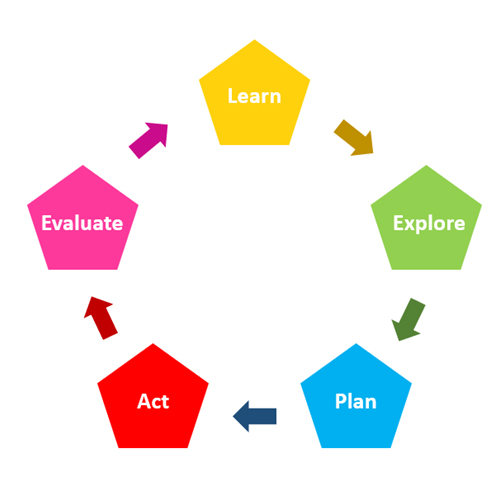
Five steps around the cycle
-
Step no. 1 • Learn
Know yourself
- Self-assessmentSelf-assessment is the first step towards gaining a greater understanding of your skills, preferences and values. First determine your strengths, weaknesses, qualifications, skillsets, experience and priorities in life.
- Know your personality typeThere are different types of personality, like active/passive, extrovert/introvert, defender/offender and bossy/submissive, and different professions suit different types — that’s why personality judgement is very important.
-
Step no. 2 • Explore
Explore and network
Explore: Try hard to explore the maximum possible choices before opting for a career. Meet your teachers, discuss with your mentors & career counsellors, search job portals and surf renowned job sites, read newspapers, and never miss any good opportunity.
Networking: Connect with others who can provide advice and referrals.
- Social networking such as LinkedIn, Twitter, FB
- Develop contacts – networking with diverse communities
- Talk to your seniors, experts and specialists of your desired profession
- Read literature, go through job sites, surf on Google to be more informed
-
Step no. 3 • Plan
Goal setting, target oriented
Now that you understand what’s important to you, have identified what you want out of your career and recognise the skill gaps, it’s time to set your goals and targets and plan your future accordingly. Plan your activities and fill up your skill gaps; take advice from your career counsellor or your mentors.
-
Step no. 4 • Act
Take action
Now it’s time to take solid action and promote your achievements with your potential employers. Give each application and interview the best chance for success.
- Resume writingDevelop and manage your resume and cover letter in an excellently impressive manner. An excellent resume displays your strengths that are valuable to your potential employer; it must mention the strengths and achievements that can prove attractive to employers. You can find the best resume formats on the net.
- Cover letterA resume should always have an impressive cover letter.
- Prepare for an interviewContact your seniors or career counsellors for guidelines. Surf the net and find the best traits to adopt before appearing in an interview.
- Furnish powerful referencesAt least 3 references from professionals or your current supervisor.
-
Step no. 5 • Evaluate
Evaluate your achievements and progress
Career development isn’t necessarily a destination – it’s more of an ongoing journey. That’s why the Career Management Model is circular, rather than linear. Keep in mind that your Career Development Plan is an evolving process; you may have to seek a change in your existing role as you want professional development and strive for excellence in your future. Then you will have to go through the same process again, learn the tricks of the trade and map your next career step.
Career development isn’t necessarily a destination – it’s more of an ongoing journey.
Modules and the detailed toolkit
For modules and the detailed Career Management Toolkit, see the full resource.
Speak to a counsellor
Contact the Office of Alumni Relations & Career Development to arrange a conversation about your career or wellbeing.